Ball Valve vs Butterfly Valve: Which One Is Better?
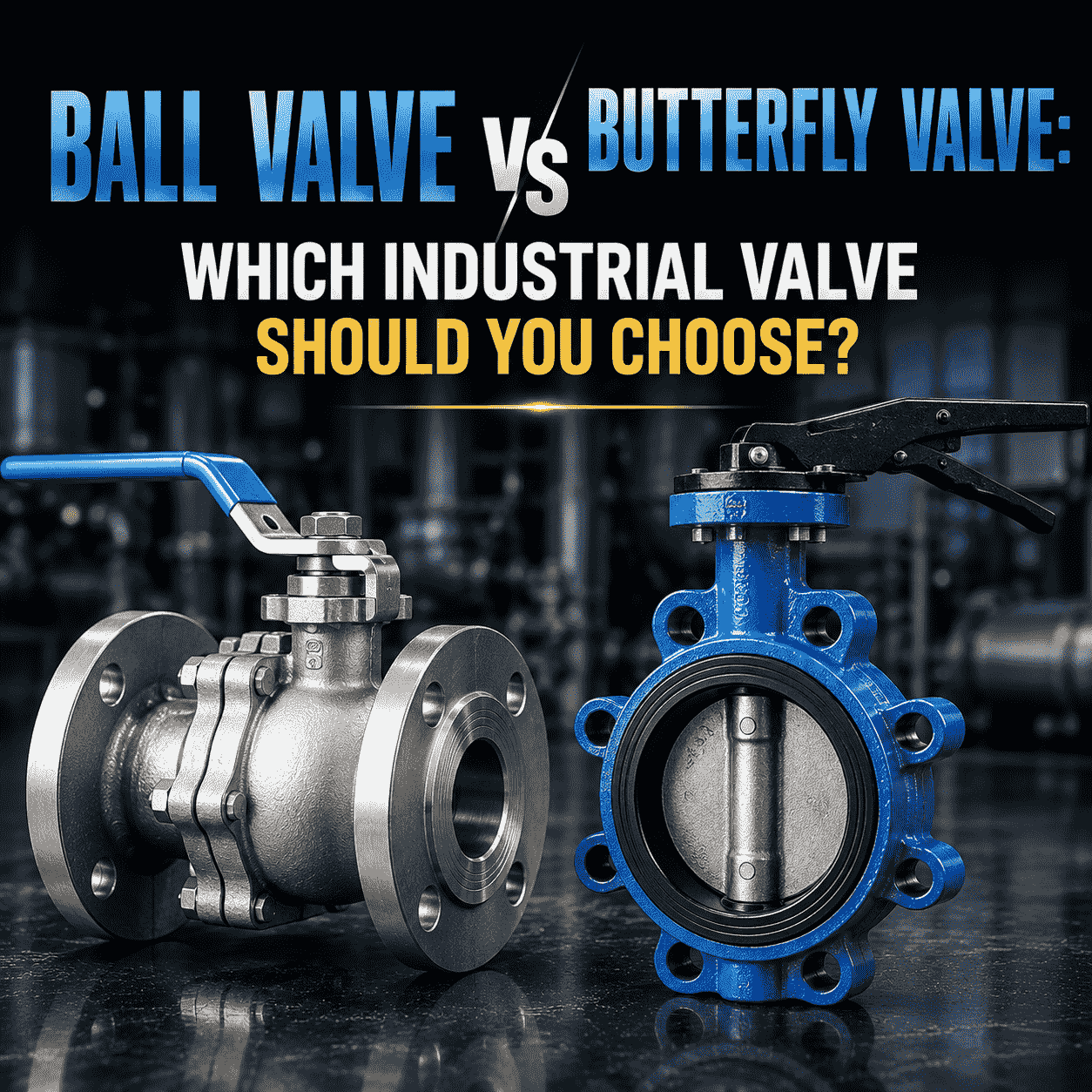
Choosing the right industrial valve can make a big difference in the performance, maintenance, and reliability of a piping system. Two commonly used options are ball valves and butterfly valves. Both can be used for flow isolation, but their design, operation, installation requirements, and ideal applications are different.
So, ball valve vs butterfly valve — which one is better?
The answer depends on your application.
Let's compare both valves in a simple and practical way.
What Is a Ball Valve?
A ball valve uses a spherical component with a hole through its centre to control the movement of fluid. When the opening aligns with the pipeline, flow can pass through. Rotating the ball closes the passage.
Ball valves are commonly known for their quick quarter-turn operation and reliable shut-off.
Where Are Ball Valves Used?
Ball valves are commonly found in:
- Water systems
- Gas pipelines
- Compressed-air systems
- Chemical processing
- Oil and gas applications
- Industrial process lines
- Utility systems
They are particularly useful when quick and dependable ON/OFF flow control is required.
What Is a Butterfly Valve?
A butterfly valve controls flow using a circular disc positioned inside the pipeline. The disc rotates around a central shaft to open, close, or restrict flow.
One of its major advantages is its compact and lightweight design, especially when compared with some larger valve arrangements.
Where Are Butterfly Valves Used?
Common applications include:
- Water treatment plants
- HVAC systems
- Cooling-water lines
- Fire protection systems
- Industrial utilities
- Large pipelines
- General process applications
Butterfly valves are often considered when space, weight, and pipeline size are important factors.
Ball Valve vs Butterfly Valve: Key Differences
Let's compare the two valves based on the factors that matter most in industrial applications.
| Feature | Ball Valve | Butterfly Valve |
|---|---|---|
| Operating method | Quarter-turn | Quarter-turn |
| Main use | Isolation / ON-OFF | Isolation & flow control |
| Design | Ball mechanism | Disc mechanism |
| Size & weight | Generally heavier in larger sizes | Generally compact and lightweight |
| Space requirement | Moderate | Low |
| Large pipe applications | Can be used, but may become heavier/costlier | Often well suited |
| Flow path | Typically provides a relatively open passage when fully open | Disc remains in the flow path |
| Automation | Pneumatic/electric actuation available | Pneumatic/electric actuation available |
| Typical applications | Gas, water, process fluids | Water, HVAC, utilities, large pipelines |
The exact performance depends on the specific valve design, material, pressure class and application.
Which Valve Is Better for Flow Control?
This is one of the most important differences to understand.
- A ball valve is commonly selected for reliable isolation and quick ON/OFF operation.
- A butterfly valve can be used for isolation and, depending on the design, flow regulation.
However, continuous throttling should only be performed when the specific valve is designed and rated for that service.
Ball Valve vs Butterfly Valve for Large Pipelines
Pipeline size can strongly influence valve selection.
For larger pipelines, butterfly valves can offer advantages because their compact construction can reduce overall weight, space requirements, and installation complexity.
Ball valves can also be used in large-diameter applications, particularly where their specific performance characteristics are required, but the cost and weight may become important considerations.
Therefore, for large-diameter water and utility pipelines, butterfly valves are often a practical option.
Which Valve Is Better for Tight Shut-Off?
When reliable shut-off is the main priority, ball valves are often considered a strong choice.
Their design allows the ball to rotate into a closed position and create a controlled sealing interface.
However, shut-off performance depends on factors such as:
- Valve design
- Seat material
- Pressure rating
- Fluid characteristics
- Temperature
- Manufacturing quality
The valve specification should always match the actual operating conditions.
Which Valve Is More Compact?
In general, butterfly valves have a compact and lightweight construction, particularly in larger pipeline sizes.
This can make them useful when:
- Installation space is limited
- Pipeline diameter is large
- Weight needs to be minimized
- Installation and maintenance access are important
Ball valves can require more space around the valve and actuator depending on their size and configuration.
Which Valve Is More Cost-Effective?
Cost depends on valve size, material, pressure rating, actuator requirements, and manufacturer.
However, butterfly valves are often considered economical for larger pipeline applications because of their compact design and relatively low material requirements.
Ball valves may offer better value when dependable shut-off and quick operation are more important than minimizing valve size or initial cost.
Instead of comparing only purchase price, consider the total cost of ownership, including installation, maintenance, energy impact, and replacement requirements.
How to Choose Between a Ball Valve and Butterfly Valve?
Before making a decision, consider these questions:
1. What Fluid Are You Controlling?
Water, gas, steam, oil, and chemicals can have different valve requirements.
2. What Is the Pipe Size?
For larger pipelines, the compact design of a butterfly valve can become a significant advantage.
3. What Is the Operating Pressure?
Always select a valve according to the system's normal and maximum pressure requirements.
4. What Is the Operating Temperature?
Temperature can affect valve body materials, seats, seals, and overall performance.
5. Do You Need ON/OFF or Regulation?
For quick isolation, a ball valve can be a strong option. For isolation and certain flow-control applications, a butterfly valve may be more suitable.
6. Is Automation Required?
Both ball valves and butterfly valves can be equipped with pneumatic or electric actuators for automated operation.
Ball Valve or Butterfly Valve: Quick Decision
Choose a Ball Valve when you need:
- Quick ON/OFF operation
- Reliable isolation
- Compact quarter-turn operation
- Applications requiring strong shut-off
- Suitable performance for gas and process applications
Choose a Butterfly Valve when you need:
- Compact construction
- Lower weight
- Large pipeline applications
- Water or utility-system applications
- Efficient isolation
- Space-conscious installation
Final Verdict
So, ball valve vs butterfly valve — which should you choose?
There is no universal winner.
- A ball valve can be a better choice when reliable shut-off and fast ON/OFF operation are the main priorities.
- A butterfly valve can be a better choice when compact construction, lower weight and large pipeline applications are more important.
The final decision should be based on the fluid, pressure, temperature, pipe size, flow requirement, installation conditions, and operating method.
If you are selecting an industrial valve for a new project or replacing an existing valve, getting the technical specifications right before purchasing can help improve reliability and reduce future maintenance problems.