Industrial Valves: Types, Applications & How to Choose the Right Valve
Industrial valves may be small components in a large industrial system, but they play a major role in controlling the movement of liquids, gases, and steam. From manufacturing plants to water treatment facilities, valves help control, isolate, and regulate different processes. But with so many types of industrial valves available, one common question is: Which valve is right for my application?
The answer depends on the type of fluid, pressure, temperature, flow requirement, and the purpose of the valve.
Let's understand the most common types of industrial valves and how to select the right one.
What Are Industrial Valves?
Industrial valves are mechanical devices used to control the flow of fluids through pipelines and equipment. Depending on their design, they can start or stop flow, regulate flow, or prevent unwanted reverse flow.
They are commonly used for:
- Water and wastewater
- Steam systems
- Compressed air
- Oil and gas
- Chemical processing
- Manufacturing plants
- Power generation
- HVAC and utility systems
Choosing the correct valve is important because the wrong valve can lead to leakage, poor flow control, increased maintenance, and reduced system performance.
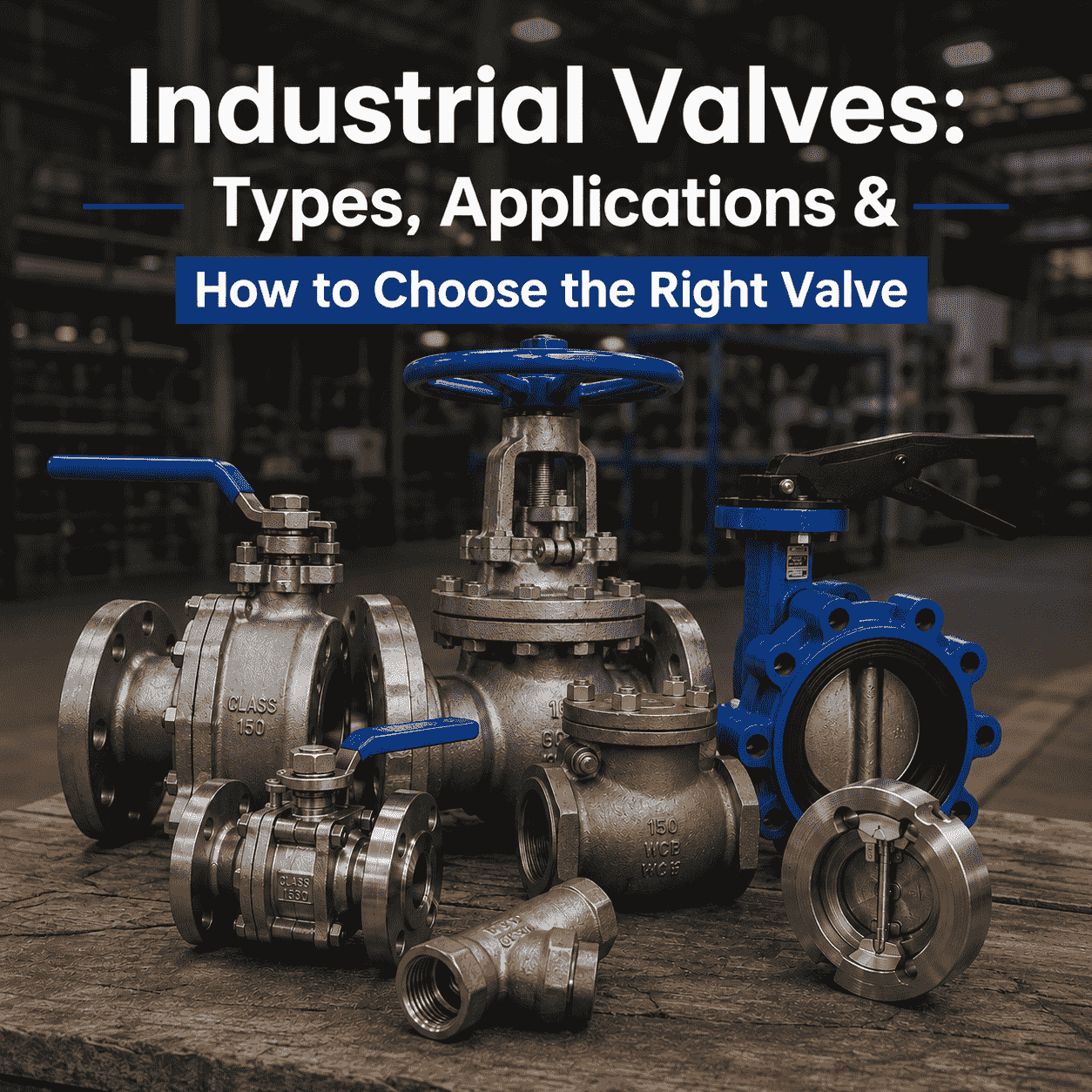
Common Types of Industrial Valves
Different industrial processes require different valve designs. Here are some of the most commonly used types.
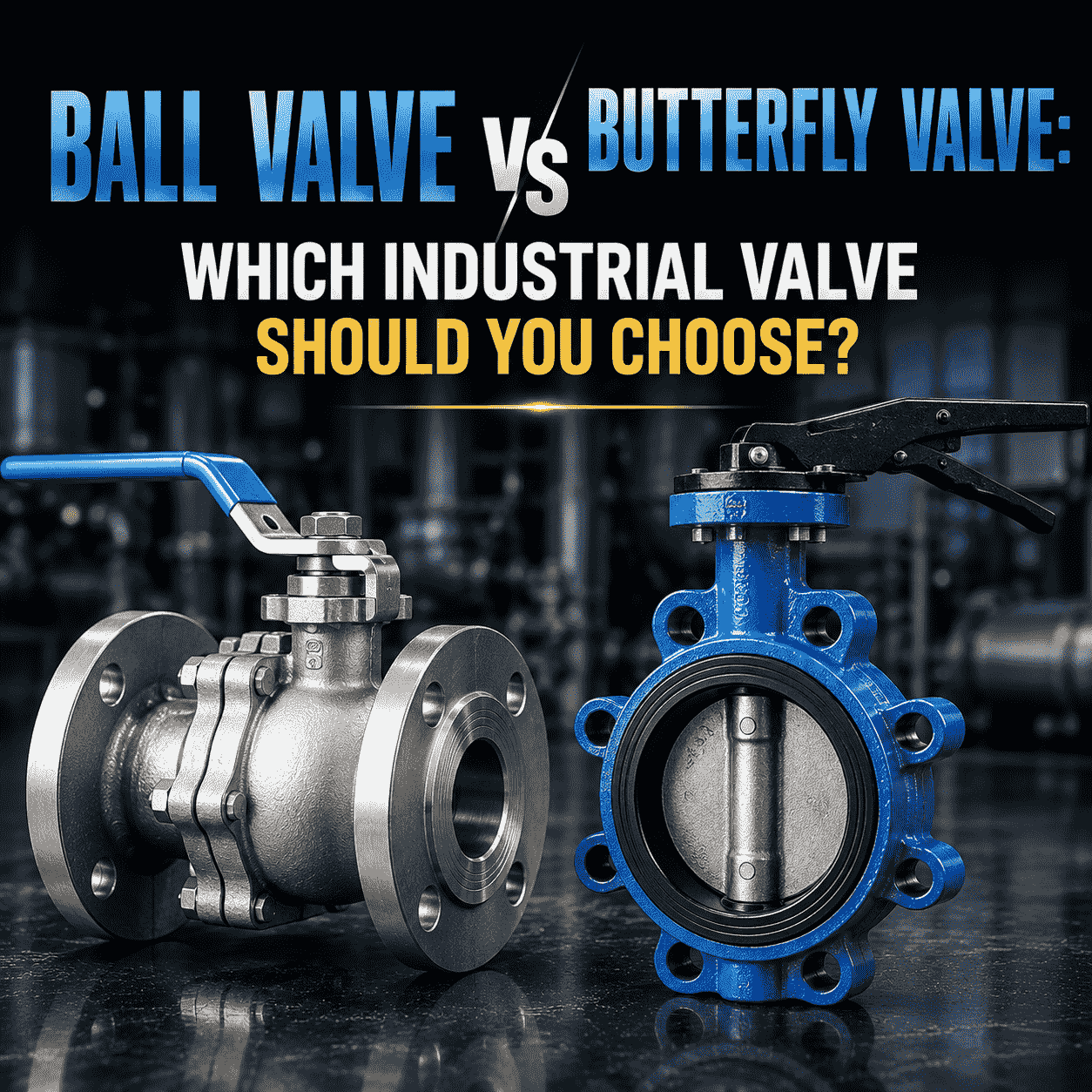
1. Ball Valve
A ball valve uses a rotating ball to control the flow of a fluid. It is popular because it provides quick operation and reliable shut-off.
- Common applications: Water, gas, compressed air, chemical and process systems.
- Best suited for: Fast on/off flow control.
2. Butterfly Valve
Butterfly valves use a rotating disc to control flow. Their compact and lightweight design makes them especially useful for larger pipelines.
- Common applications: Water treatment, HVAC, cooling systems, and industrial utilities.
- Best suited for: Isolation and general flow-control applications.
3. Gate Valve
Gate valves are primarily designed for isolating a pipeline. The gate moves up or down to open or close the flow passage.
- Common applications: Water lines, steam systems, pipelines, and industrial process systems.
- Best suited for: Fully open or fully closed applications.
4. Globe Valve
Globe valves are designed for controlling and regulating flow. Their construction allows the flow to be adjusted more progressively.
- Common applications: Steam, heating systems, and process-control applications.
- Best suited for: Flow regulation.
5. Check Valve
A check valve allows flow in one direction while helping prevent reverse flow. Many check valves operate automatically based on flow conditions.
- Common applications: Pump lines, water systems, compressors, and industrial pipelines.
- Best suited for: Backflow prevention.
How to Choose the Right Industrial Valve?
Selecting an industrial valve should never be based only on pipe size or price. A few important factors should always be considered.
1. Identify the Application
First, determine what the valve needs to do.
Do you need:
- Simple ON/OFF control?
- Flow regulation?
- Backflow prevention?
- Pipeline isolation?
- Automated operation?
The answer will help determine the appropriate valve type.
2. Consider the Fluid
The medium flowing through the valve is extremely important.
Is it:
- Water?
- Steam?
- Oil?
- Gas?
- Chemical?
- Corrosive fluid?
The valve body, seat, and sealing materials must be compatible with the medium.
3. Check Pressure and Temperature
Every industrial valve has operating limitations. Before selecting a valve, check the system's normal and maximum pressure as well as operating temperature.
This becomes particularly important in high-pressure and high-temperature applications such as steam systems.
4. Check Pipe Size and Connection
The valve should match the pipeline requirements. Connection type is also important and may include flanged, threaded, wafer, lug, or welded connections.
5. Manual or Automated?
Modern industries increasingly use automation for better process control.
Depending on the application, valves can be combined with:
- Pneumatic actuators
- Electric actuators
- Solenoid systems
- Position feedback
- Industrial control systems
For automated applications, both the valve and actuator should be selected according to the required operating conditions.
Why Correct Valve Selection Matters
The right industrial valve can make a noticeable difference to plant performance.
A properly selected valve can help provide:
- Better Flow Control: Maintain the required movement of process media.
- Reliable Isolation: Safely shut down sections of a pipeline when required.
- Lower Maintenance: Reduce problems caused by unsuitable materials or operating conditions.
- Better Equipment Protection: Help prevent issues such as reverse flow and unwanted process conditions.
- Improved Efficiency: Support smooth and reliable operation of the overall system.
Industrial Valve Applications
Industrial valves are used across many industries, including:
- Manufacturing: Process lines, cooling systems and compressed-air networks.
- Water Treatment: Water distribution, filtration and wastewater systems.
- Chemical Industry: Process lines handling different chemicals and fluids.
- Power Plants: Steam, cooling water and feedwater systems.
- Oil & Gas: Pipelines, processing systems and fluid transfer.
- Pharmaceutical & Food Industries: Process systems where material compatibility and hygiene are important.
Final Thoughts
There is no single best industrial valve for every application. The right choice depends on what the valve needs to control and the conditions under which it will operate.
Before purchasing an industrial valve, always consider the application, fluid, pressure, temperature, pipe size, material, connection, and operating method.
Whether you need a ball valve, butterfly valve, gate valve, globe valve or check valve, selecting the correct specification can help improve reliability and long-term system performance.
For industrial valve requirements in India, working with an experienced engineering products supplier can also make the selection process easier and more reliable.