Steam Traps: Types, Working, Benefits & Importance in Industrial Steam Systems
Steam is widely used in industries for heating, processing, and power-related applications. But when steam cools down, it produces condensate that needs to be removed from the system.
This is where steam traps become important.
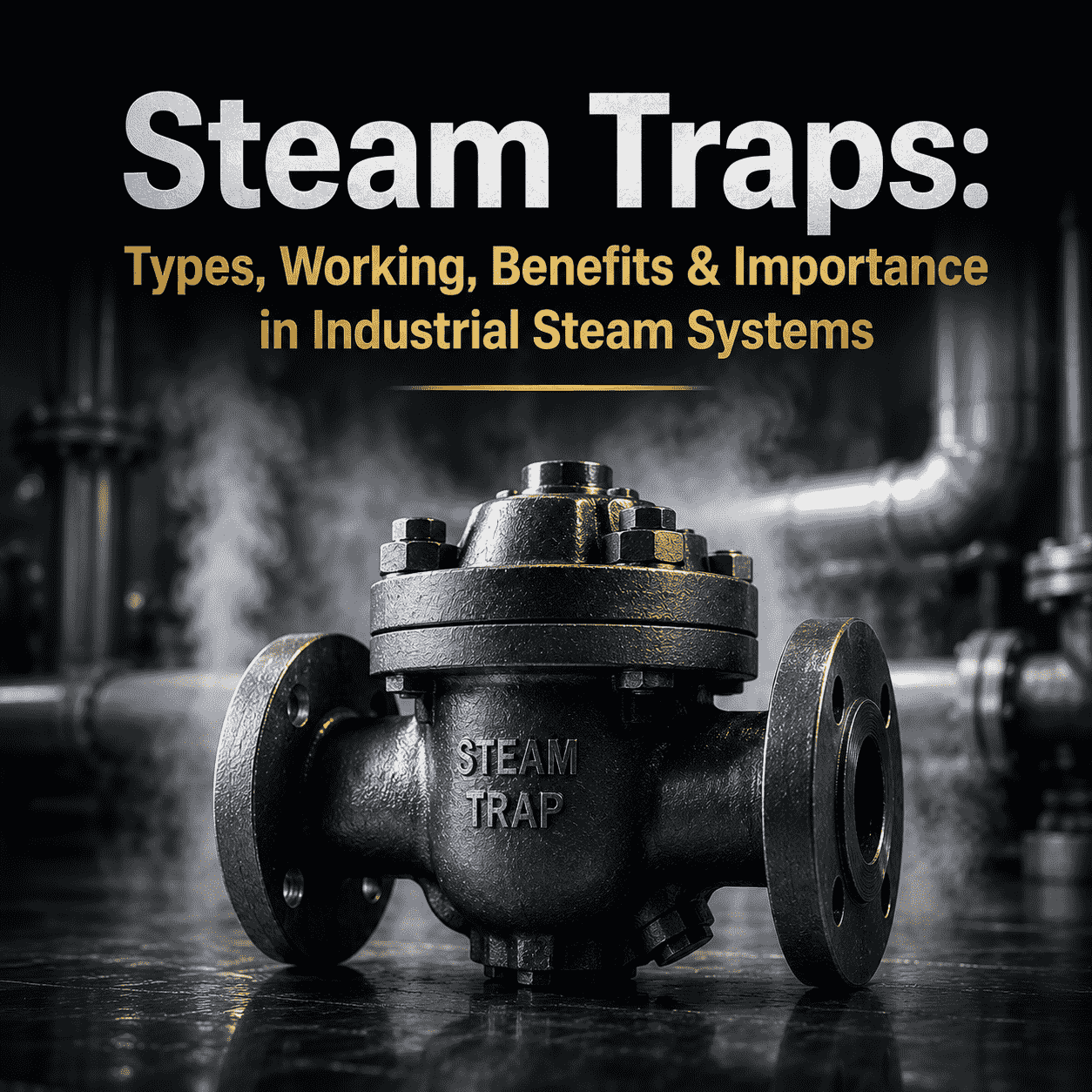
A steam trap automatically removes condensate, air and other non-condensable gases from a steam system while helping prevent the unnecessary loss of live steam. The right steam trap can improve heat transfer, energy efficiency, and overall steam-system performance.
Let's understand how steam traps work, their major types, and why they are important for industrial applications.
What Is a Steam Trap?
A steam trap is an automatic valve used in steam systems to separate and discharge condensate without continuously releasing live steam.
When steam transfers its heat, it eventually condenses into water. If this condensate remains inside the steam pipeline or equipment, it can affect heating efficiency and may create operational problems.
A properly selected steam trap helps maintain an efficient steam system by removing unwanted condensate at the right time.
How Does a Steam Trap Work?
The basic purpose of a steam trap is simple:
Keep steam inside the system and remove condensate.
The trap detects the difference between steam and condensate using a specific operating principle. Depending on the trap design, this may involve temperature, density, pressure, or a combination of these factors.
When condensate reaches the trap, the internal mechanism allows it to discharge. When live steam approaches, the trap closes or restricts the discharge path.
This automatic operation allows the steam system to continuously remove condensate without requiring constant manual intervention.
Why Is Condensate Removal Important?
Condensate may seem harmless, but excessive accumulation can reduce the performance of a steam system.
Proper condensate removal can help:
- Maintain efficient heat transfer
- Reduce energy losses
- Protect steam equipment
- Improve heating performance
- Reduce water accumulation in pipelines
- Support reliable steam-system operation
In some systems, removing air and other non-condensable gases is also important because they can interfere with heat transfer.
Types of Steam Traps
Different industrial applications require different steam trap designs. The three commonly used categories are mechanical, thermostatic, and thermodynamic steam traps.
1. Mechanical Steam Traps
Mechanical steam traps operate primarily by detecting the difference in density between steam and condensate.
A float or similar mechanical mechanism moves according to the amount of condensate present and controls the discharge opening.
Common Applications
Mechanical traps are often used where continuous condensate removal is required, including:
- Heat exchangers
- Process equipment
- Steam heating systems
- Industrial production lines
They can be particularly useful in applications where efficient condensate drainage is important.
2. Thermostatic Steam Traps
Thermostatic traps respond mainly to temperature differences between steam, condensate, and cooler fluids.
They can also help discharge air and other non-condensable gases depending on the design.
Common Applications
They may be used in:
- Steam pipelines
- Heating systems
- Air-handling equipment
- Process applications
Their operation makes them useful where temperature-based condensate management is suitable.
3. Thermodynamic Steam Traps
Thermodynamic steam traps use the pressure and flow behaviour of steam and condensate to control discharge.
They are known for their relatively compact design and can be suitable for various industrial steam applications.
Common Applications
- Steam distribution lines
- Steam mains
- Industrial process systems
- High-pressure steam applications
The exact suitability depends on pressure, temperature, installation, and operating conditions.
Benefits of Steam Traps in Industrial Systems
A properly selected steam trap can contribute to better steam-system performance.
Better Heat Transfer
Removing condensate allows steam to maintain effective contact with heat-transfer surfaces.
Improved Energy Efficiency
Efficient condensate management can help reduce unnecessary steam and energy losses.
Equipment Protection
Proper drainage can help reduce issues associated with condensate accumulation and water hammer.
Reliable Steam Operation
A correctly functioning trap supports consistent operation of steam lines and process equipment.
Reduced Maintenance Problems
Selecting the right trap and maintaining it properly can help prevent leakage, blockage, and other common steam-system issues.
Where Are Steam Traps Used?
Steam traps are used in many industries where steam is required for heating or processing.
Common applications include:
- Chemical plants
- Pharmaceutical manufacturing
- Food processing
- Textile industries
- Power plants
- Refineries
- Paper manufacturing
- Sugar industries
- General manufacturing
- HVAC and heating systems
They may be installed on steam pipelines, heat exchangers, steam coils, process equipment, and other condensate-removal points.
How to Choose the Right Steam Trap?
Choosing a steam trap should be based on the actual operating conditions rather than simply selecting a commonly used model.
Consider these factors:
1. Operating Pressure
Check the normal and maximum pressure of the steam system.
2. Temperature
The trap should be suitable for the operating temperature of the application.
3. Condensate Load
Determine how much condensate the trap needs to discharge during normal and peak operation.
4. Steam Application
A steam trap used on a process heat exchanger may have different requirements from one installed on a steam distribution line.
5. Installation Conditions
Consider pipe arrangement, accessibility, drainage requirements, and installation orientation.
6. Maintenance Requirements
Choose a design that can be inspected and maintained effectively within the plant's maintenance system.
Common Steam Trap Problems
Even a good-quality steam trap can perform poorly if it is incorrectly selected, installed or maintained.
Some common problems include:
- Steam Leakage: A failed trap may continuously discharge live steam.
- Blocked Trap: Dirt or scale can restrict condensate discharge.
- Improper Sizing: An incorrectly sized trap may not handle the required condensate load effectively.
- Water Hammer: Poor condensate drainage can contribute to damaging pressure shocks in steam pipelines.
- Incorrect Installation: Poor installation can affect trap performance and service life.
Regular inspection and maintenance can help identify these issues before they affect the wider steam system.
Final Thoughts
Steam traps may be small components, but they perform an important function in industrial steam systems. By automatically removing condensate and helping manage non-condensable gases, they support efficient heat transfer and reliable steam-system operation.
The best steam trap depends on the pressure, temperature, condensate load, application, and installation conditions.
Whether you are upgrading an existing steam system or designing a new industrial process, selecting the correct steam trap can help improve efficiency, protect equipment and reduce avoidable steam losses.
For critical applications, it is always advisable to consult an experienced industrial steam-system or engineering products supplier before selecting the final steam trap.